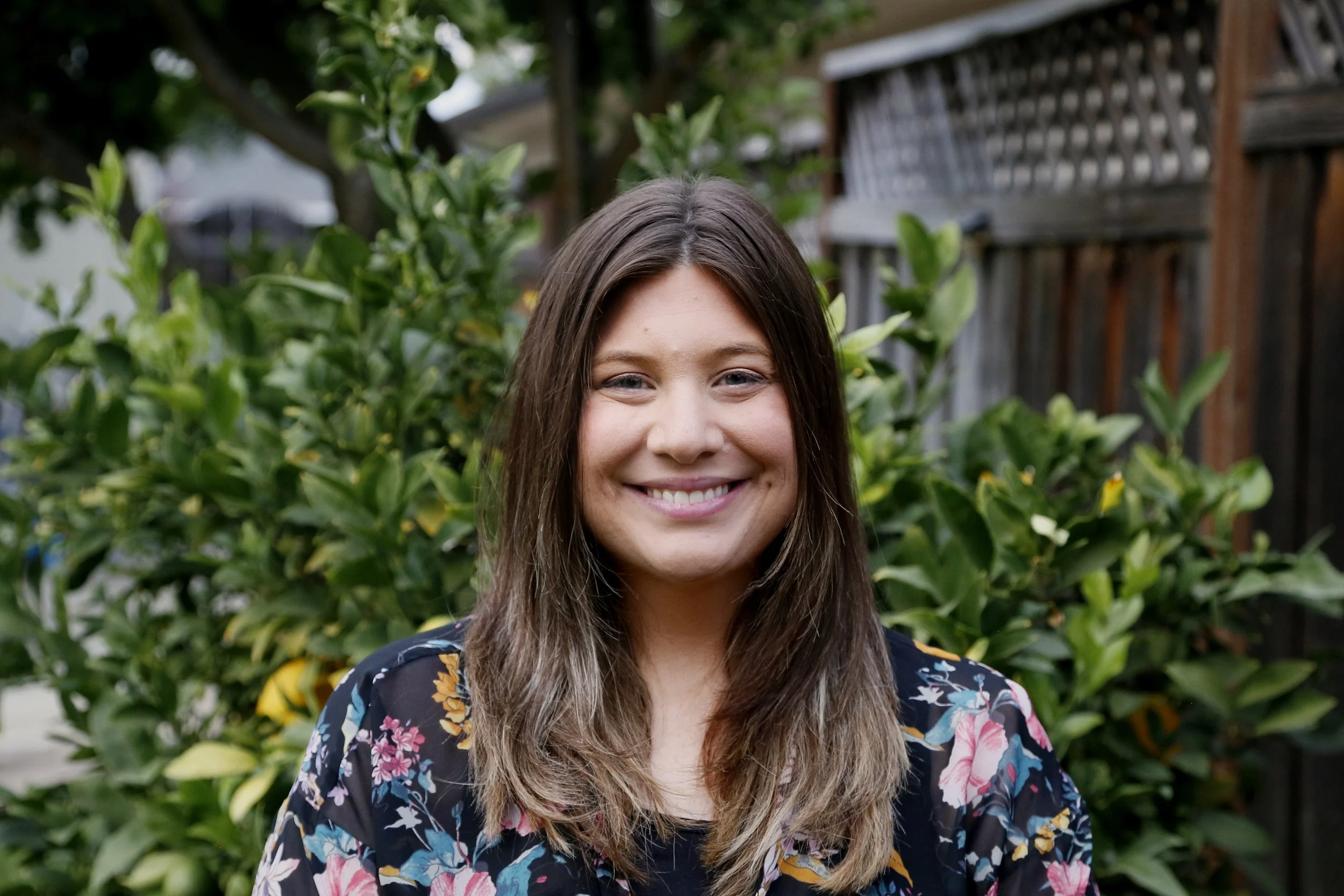
Katie

What I specialize in
OCDSome thoughts won't leave you alone until you check, wash, ask, replay, or get it just right.
OCD is sly. It whispers that one more check will keep everyone safe and make things feel right. But it always wants more: one more question, one more hour in your head, one more thing you stop doing.
What nobody sees is everything you've already pictured, over and over, in more detail than you'd ever say out loud. We don't have to unpack every single one.
It's not the thought that's the issue. It's how we respond to it. Over time, the thought can show up in the middle of dinner with people you love, and it doesn't take over the way it used to. You stay at the table.
ERP is the first-line treatment for OCD, and I build on it with I-CBT and ACT. Reassurance usually feeds OCD, even when it's well meant, and talk therapy that isn't OCD-specific can turn into more of it.
OCD therapy →Adult ADHDThe calendar you set up worked beautifully until the part where you had to keep using it.
You lost track of a deadline weeks ago, and now you can't make yourself check it, because it might already be too late, or close enough that you'll be cramming it all into a few miserable days.
Maybe you feel like a burden, so nobody knows how bad things have gotten. You can tell me, and we'll just let it be for a second. Then we can check that deadline right there in session, so you're not alone when you find out.
Some weeks nothing is on fire, just the car registration, the class you signed up for, and twelve more like them, all equally important. The calendar you set up for all of it worked beautifully until the part where you had to keep using it, and you started to wonder what that said about you.
You may not need a new calendar. We look at when you stopped opening the old one and what was going on that week, then pick the two or three things you'll do before we meet again. The rest can wait. I want ordinary things to stop costing you so much.
You don't need a diagnosis to start, and if you'd like one, I can diagnose ADHD.
Adult ADHD, including late diagnosis →Autistic and AuDHD adultsYou don't have to spend therapy translating yourself into something that makes more sense to me.
The world has already decided what it means to be autistic, and it can be hard not to start seeing yourself through that lens. Maybe you've spent years masking and dimming parts of yourself just to make everyone else more comfortable, or being told that things that work for you should be done differently.
Some parts of being autistic are genuinely hard. I'm not here to make you easier for other people to understand, and I don't have a template in my head for how you're supposed to live. If something works for you and you want to keep it, I don't need to turn it into a problem. If it's getting in your way, then we can look at it together.
In session, whatever helps you be more comfortable is completely okay with me. You don't have to spend therapy translating yourself into something that makes more sense to me before we can get to what you actually came in for.
Therapy for autistic and AuDHD adults →Trauma, including the quiet kindIt might have been one terrible day, or years of things you still don't have words for.
Some things are too ugly to look at, let alone say out loud. Others are so quiet, nothing like what you've seen on TV, that you're not sure they count. Embarrassing, shameful, infuriating. Maybe you've never told anyone. Or you did, and they got awkward, asked stupid questions, or tried to make it all better.
Whether it happened once or went on for years, you never have to tell me any of it. Just the feelings, or just that something bad happened, is enough. If you want to say more, I can hear it. I believe you. I won't ask questions that make it sound like your fault, or tell you what you should do now.
Some feelings are total opposites and make no sense at all. They don't have to.
I don't have a magic answer. We work on where it still shows up and what helps when it does. Living with it is a lot like living with grief. You might not forget, and you may still think about it every day. We figure out how it can be there without taking up every part of your life.
PTSD and complex PTSD, however it happened.
Therapy for complex trauma →Controlling relationshipsYou don't need to know whether what's happening “counts.”
Sometimes there is one clear thing you can point to. Sometimes there isn't. You may try to explain it and find that people rush to an answer before you have one. They tell you to just talk to them, set a boundary, or leave, and some get frustrated when you stay. Even when they mean well, all of that can make it harder to hear yourself think.
You don't need to know whether what's happening “counts.” We can look at what actually happens. What does saying no cost you? What have you stopped bringing up?
If I notice a pattern in how you've been treated, or I'm worried about your safety, I'll say so. If something I suggest would make things worse, tell me. I'll believe you, and we'll try something else.
I'm not secretly waiting for you to leave. We can talk seriously about safety without that meaning you have to go anywhere.
Your history may help us see what you need now. But I'm not going to look inside you for the reason someone else treated you this way.
Including domestic violence and coercive control, whether you've left or not.
Therapy for controlling relationships →If you need help right now →
Anxiety, panic, and overthinkingYou think through what could go wrong and watch your body for anything that feels off.
Anxiety can take up far more of your life than anyone sees. You think through what could go wrong, watch your body for anything that feels off, and start avoiding things you used to do. Little by little, your life gets smaller.
In session, my questions aren't about making you prove every anxious thought is illogical. You may have thought it to death already, and it still hasn't helped.
I'm trying to figure out what actually needs to change and what doesn't need another hour of your attention. Maybe the job really is the problem, or maybe the spiral about it is. Maybe panic has started deciding whether you get on a plane.
You might get on anyway, knowing you could panic. I'll tell you what I'm seeing, but I won't make the choice for you. I want you to have a choice before anxiety makes it for you.
Therapy for anxiety, panic, and overthinking →$295 per 60-minute session. I don't take insurance; I provide superbills for PPO plans.
In crisis right now? Call or text 988.
I-CBT Training, OCD Training School · ERP for OCD
I don't have a template in my head for how you're supposed to live.
What working with me is like
You might be able to explain your patterns better than anyone and still be stuck in them. While you talk, I'm listening for the detail you mention in passing and how it connects to everything else you've told me. I'll share my working theory early and tell you why I'm asking what I'm asking, so we can test it together before we build a plan on it. Everything I know about how these patterns work is yours to draw on, and you're the one who knows whether it fits your life.
If you've been circling a question alone for a long time, we'll work out the next step. That might mean picking something small enough to actually do this week. When you're ready, it might mean trusting an answer you've already reached even though it's been hard to accept. I'll often ask, “Is thinking about this more getting you closer to feeling better or keeping you stuck?”
If you tell me “I know what works, I just don't do it,” I'll want to know exactly what happens in the moment you don't. That moment usually tells us whether to work on what's getting in the way or stop forcing a solution that's costing more than the problem itself.
You can say something like “I don't want this job anymore” out loud for the first time without having to do anything about it. And if you're carrying something painful, you never have to tell me the details. I won't pressure you, and I'll be honest about what I see.
How I work →Who you'd be talking to
I've worked in mental health since 2018 and as a therapist since 2021. Alongside my specialties, my work has included a wide range of people, such as refugees, immigrants, and veterans. I spent the first part of my career with kids and teens, including in foster care, and I still draw on that when parenting comes up.
I have an MSW from Sacramento State, where my research asked licensed therapists how best to help people in abusive relationships. I completed the 40-hour domestic violence training at Laura's House and inference-based CBT (I-CBT) training through the OCD Training School. I'm also a professional member of the International OCD Foundation.
I have ADHD and OCD myself, and I've had both a lot longer than I've been a therapist. I'm LGBTQ+ and neurodivergent affirming.
Learn more about me →How you'd know it's helping
My hope is that therapy shows up in your life outside the hour we spend together. It could be less time replaying a conversation in your head, or less apologizing for what works for you. Maybe your house gets organized, or you finally accept that it will never be perfect. It could be trusting your own read on things again, or noticing that what hurt you is still there but isn't running your life anymore.
Start with a free 20-minute call
We'll talk by phone, and there's nothing you need to prepare. You can jump right into what's going on, or I can guide the conversation. I'll ask what you're hoping to get out of therapy and tell you what I'm hearing. Then we can decide if it feels like a good fit. If it doesn't, I'm happy to point you toward other options. And if you're talking to other therapists too, I always encourage that.
If you'd rather text or email before our phone call, that's more than fine. Ask me anything that's come up for you or that you're unsure about, and I'll clear it up as best I can. You can text 408-549-1971 or email katie@evolvetalktherapy.com.
Sessions are by video and last the full 60 minutes. I'm private pay, and if your plan has out-of-network benefits, I can give you a monthly superbill to submit.
For clinicians
I consult with licensed clinicians on cases involving OCD, ADHD, autism and AuDHD, trauma, controlling relationships, and anxiety, especially when they overlap or the usual approach isn't working. I welcome referrals for adults anywhere in California, and I'm developing trainings.
For clinicians & trainings →